









How to Assess the Real Supply Capability of an LED Supplier
Why “Having Products” ≠ “Having Supply Capability”
It is easy to find an LED supplier online with a catalog of products and attractive pricing. However, a product listing alone tells you nothing about whether the company can manufacture that product in volume, maintain consistent quality across thousands of units, or deliver on schedule month after month.
In the LED industry, it is common for traders or small workshops to present themselves as manufacturers. They may provide samples, but struggle with mass production consistency, have limited capacity for large orders, or lack stable material sourcing to support long-term cooperation. For procurement teams, choosing the wrong leds supplier can result in production delays, quality defects, costly rework and even supply chain disruptions downstream.
The right question is not “can they supply LEDs?” — it is “can they supply LEDs reliably, at scale, and over time?”
First: Check If Product Scope Truly Matches Your Procurement Needs
How to verify product capability:
-
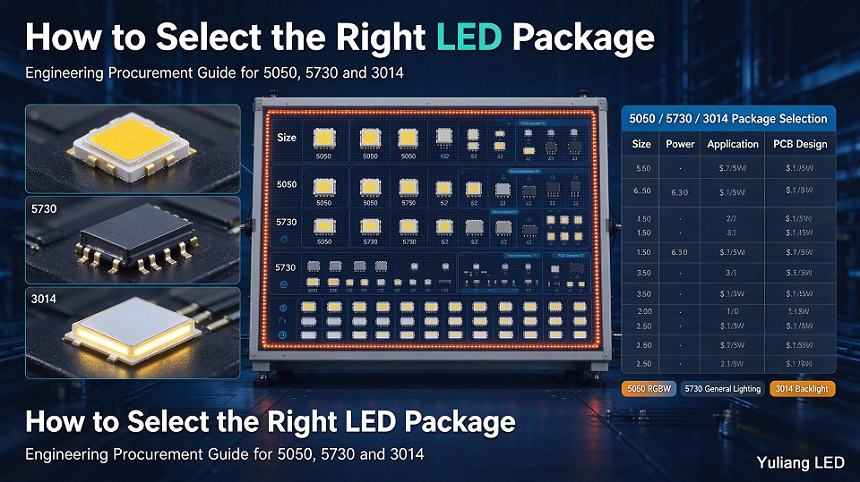
Match your exact form factors and specs: Review whether the supplier regularly produces your required package types (such as 0402, 0603, 3528, 5050, 3535 ceramic, side-emitting 3014 or piranha LEDs), wavelengths, color temperatures, CRI levels and power ratings. Generalist suppliers may carry a little of everything, but specialized LED supplies deliver tighter specification control.
-
Ask for full datasheets, not just sample photos: A credible LED supplier will provide complete specification sheets with optical, electrical and thermal parameters for every model. If a supplier cannot produce official datasheets, they likely do not control the product design or manufacturing process.
-
Evaluate customization capacity: If you require custom binning, specific beam angles, integrated lenses or special coatings, check if the supplier has in-house engineering support and a track record of custom projects. Custom capability is a strong indicator of true manufacturing control.